
Social Media for Aesthetic Clinics: Why Viral Doesn't Book
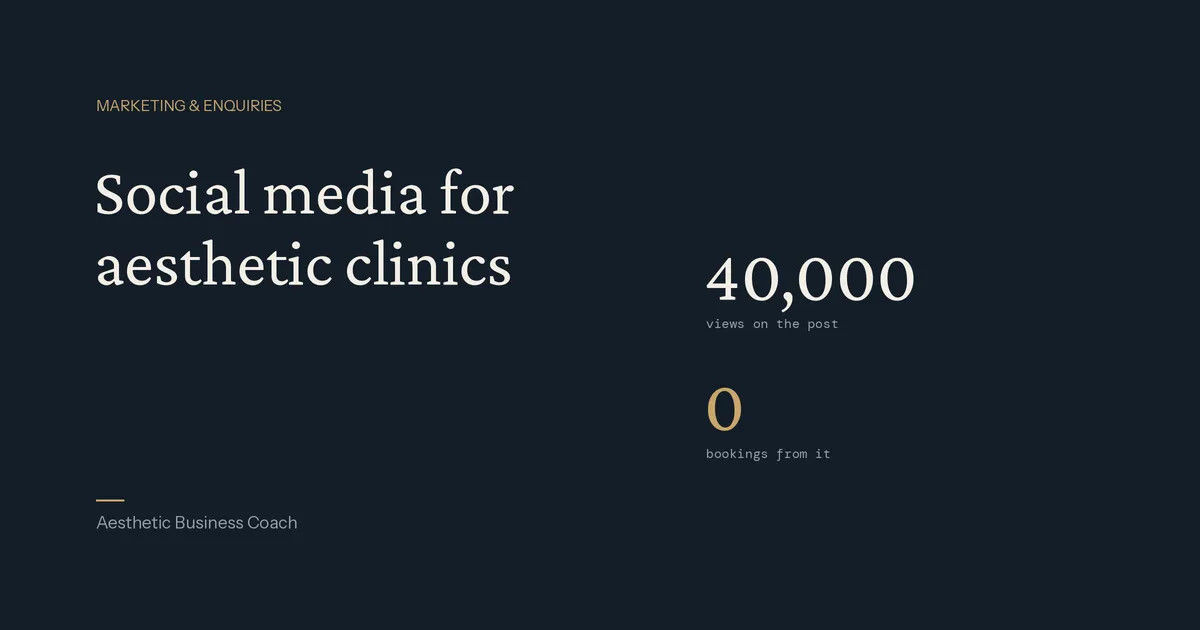
Social media for aesthetic clinics is where owners spend the most hours for the least measurable return, and I understand why, because I once made a post that went, by clinic standards, viral. Tens of thousands of views, hundreds of comments, notifications all day for a week. It produced almost nothing. This post is why, what I now believe a clinic’s content is actually for, how to make it inside the rules, and the boring bit at the end that decides whether any of it books anyone.
Why did the viral post produce nothing?
Because it was interesting to everybody, which meant it was relevant to almost nobody who could walk into my clinic. Reach isn’t the same as reaching the right people. A large audience of strangers in the wrong postcodes is a vanity metric with a nice graph attached.
Years ago I posted something that took off. By clinic standards it was a landslide. Shares from accounts I’d never heard of, comments from cities I’d never visited, a phone that didn’t stop. I felt, briefly, like I’d cracked something.
It produced a handful of enquiries, mostly from other cities, and one booking I’m fairly sure would have found us anyway. It took me a while to work out why, and the answer is embarrassingly obvious in hindsight. The post was about a topic everyone found interesting. My clinic served people within twenty minutes of one building.
There was a second failure underneath, and it was mine. Even the few local people who did engage had nowhere obvious to go. No clear next step, no easy way to enquire, and the follow up behind it, at that stage of my clinic’s life, was slow. The tiny fraction of that audience who were genuinely interested hit a dead end and drifted off, and I never knew who they were.
What is a clinic’s social media actually for?
Familiarity with the people who could become patients, and a path for the ones who are ready. It isn’t for reach, and it rarely books anyone directly. It’s for being the clinic someone feels they already know when they finally search “skin clinic near me” two weeks after seeing your practitioner explain something clearly.
Content compounds far more through familiarity than through spikes. Showing up consistently to a modest local audience, so people feel they know your face before they ever ring, builds something a viral moment can’t: recognition that converts. The clinics that win locally are usually posting steadily to a few hundred of the right people.
That reframes what a good post looks like. Not the one with the most views. The one where a patient at their first consultation says “I’ve been watching your videos for months”. That sentence is worth more than any number on the insights screen, and it’s the one the marketing guide puts social content last for: it feeds the other channels rather than replacing them.
What should an aesthetic clinic post?
The practitioner, talking. What a concern is, what a consultation involves, what to expect from a treatment, the aftercare mistake everyone makes, the question the front desk answered five times this week. Phone quality, thirty seconds, subtitles on. Then the clinic itself: the room, the team, the door patients will walk through. Then, occasionally, a clear consultation offer with terms.
The formats that work for a local clinic, in rough order:
- Practitioner to camera answering one real question. The same questions that make good emails and blog posts. One question, one honest answer, no promises.
- A walkthrough of a first visit. What happens from the door to the plan. This sells the experience, and chains can’t copy it because their practitioner might be different next month.
- The team, being the team. The receptionist who remembers names. The practitioner setting up a room. People choose clinics that feel like neighbours.
- A device treatment explained, named and priced, because device treatments can be. What it’s for, what a session involves, what a course costs.
- A consultation offer, with terms stated, maybe once a month.
What doesn’t work, or works and then costs you: before and after images (a compliance risk with modest value, because every clinic posts them and patients discount them), transformation language, reposted reviews, trend audio with no local relevance, and anything about a prescription treatment by brand name.
Which rules apply to clinic social media?
All of them. A social post is advertising under the AHPRA guidelines, the TGA Advertising Code applies to any mention of a therapeutic good, and since September 2025 any content about higher risk cosmetic procedures needs to be restricted to adults and kept away from testimonials, filters and “safe” or “painless” language. Australian Consumer Law covers any offer or price.
The specific traps on social:
- Reposting a patient’s story or comment about their treatment. That’s a testimonial in your advertising. Liking and sharing it is named in the 2025 guidelines.
- Naming an injectable brand in a caption, a hashtag or a reply. Prescription medicines can’t be advertised to the public.
- Filters or apps that simulate a result. Banned for higher risk procedures.
- “Treat yourself”, “girls’ night”, “lunchtime” framing on a prescription procedure. Trivialisation is the word AHPRA uses.
- A discount without terms in the same post. “20% off this week” needs what, for whom, until when, in the caption.
- Content about higher risk procedures visible to under-18s. Use the platform’s audience controls where they exist.
The AHPRA guidelines post has the full list. The good news is that the content that stays inside the rules (practitioner explaining, consultation offered, experience shown) is the content that builds familiarity anyway.
How much should a clinic post, and who should do it?
Two or three times a week, steadily, forever, to the same local audience. One person owns it, with the practitioner filming for fifteen minutes once a fortnight. Batch it. Plan a month in an afternoon around one concern. A clinic that posts daily for three weeks and then goes silent for two months has taught its audience to stop looking.
The rhythm that survives a busy clinic: the practitioner records six to eight short videos in one sitting, answering the month’s questions. The owner of the account posts them across the month with a short caption, a link to the relevant treatment page, and a way to enquire. The Monthly Campaign Planner in the Learning Academy is built around exactly this, and the monthly plan in the marketing guide shows where the posts sit alongside the email and the ads.
Don’t chase the algorithm. It rewards things that aren’t your job, and it changes. Chase the patient who says “I’ve been watching your videos”.
What has to happen after someone raises a hand?
The boring bit that decides everything. A comment, a DM, a tap on the link, a profile visit that becomes a website visit. Each one needs a path: something obvious to click, an instant reply behind it, and follow up that catches whoever was interested. Without that, the best content in the world is attention with nowhere to go.
Here’s the path:
- Every post has a next step. “Book a consultation” with the link in the bio or the profile button. Not “DM us for info”, unless DMs are answered in minutes.
- DMs land in the same inbox as everything else, with an instant first reply. If they live on the receptionist’s phone, they’re a leak. The speed to lead post covers this.
- Anyone who enquires and goes quiet gets the follow up sequence.
- Anyone who visits the website from a post and doesn’t book gets retargeted, gently, with the practitioner’s video. That’s what Meta ads are for.
- Every enquiry is tagged with its source, so you know what the content produced.
Attention without a path is a party you didn’t invite anyone to. Building the path is the systems work in every coaching plan, and ClinicOS routes the DMs and runs the replies. What’s included is on the pricing page.
How do you know if social media is working for the clinic?
Enquiries and consultations tagged as social, monthly, and the number of new patients who say they’d seen your content. Not followers, not views, not engagement rate. If a post ever takes off, enjoy it. Then check the postcodes before you conclude you’ve found something repeatable.
The two numbers I’d track: DMs and link taps that became consultations, by month, and the share of new patients who mention your content at their first visit (ask at the consultation, it’s one question). Both grow slowly and steadily when the content is right. Neither moves with a viral post, which is the whole lesson.
Frequently asked questions
Does social media work for aesthetic clinics?
Yes, for familiarity rather than direct bookings. Steady, useful content from the practitioner to a modest local audience means patients feel they know you before they search. Where it fails is when clinics chase reach, post to strangers in the wrong postcodes, and have no path from the post to an enquiry to a reply.
What should an aesthetic clinic post on Instagram?
The practitioner answering one real patient question per video, phone quality, thirty seconds, subtitles on. The clinic and the team as they are. Device treatments explained and priced. An occasional consultation offer with terms. Avoid before and afters, reposted reviews, brand names for prescription treatments, and trend content with no local relevance.
How often should a clinic post on social media?
Two or three times a week, consistently, to the same local audience, for years. Batch the practitioner’s videos monthly and let one person post them. Consistency to a few hundred of the right people beats bursts to thousands of the wrong ones, and it survives busy weeks because the content is already made.
Can clinics post before and after photos on social media?
Only if they meet AHPRA’s conditions: own patients, consent, consistent lighting and angles, unedited, representative, and restricted from under-18s for higher risk procedures. Even then the marketing value is modest because every clinic posts them. Most clinics are better off keeping before and afters for the consultation room.
Why doesn’t a viral post lead to bookings?
Because reach isn’t reaching the right people. A post that’s interesting to everyone is relevant to almost nobody within driving distance, and a large audience of strangers in the wrong postcodes can’t become patients. The few local people who engage usually hit a dead end because there’s no path from the post to an enquiry.
How do I turn Instagram followers into patients?
Give them a path. Every post links to a consultation or treatment page. DMs land in an inbox that replies within minutes. Anyone who enquires and goes quiet gets a follow up sequence. Site visitors who don’t book see the practitioner’s video again. Tag every enquiry by source so you can see what the content produced.
Book a free 45 minute discovery call
Bring your last three months of posts and a count of enquiries that came from social. We’ll work out whether the content is reaching your suburb or the world, check it against the rules, and build the path from post to booking. Book your discovery call here.