

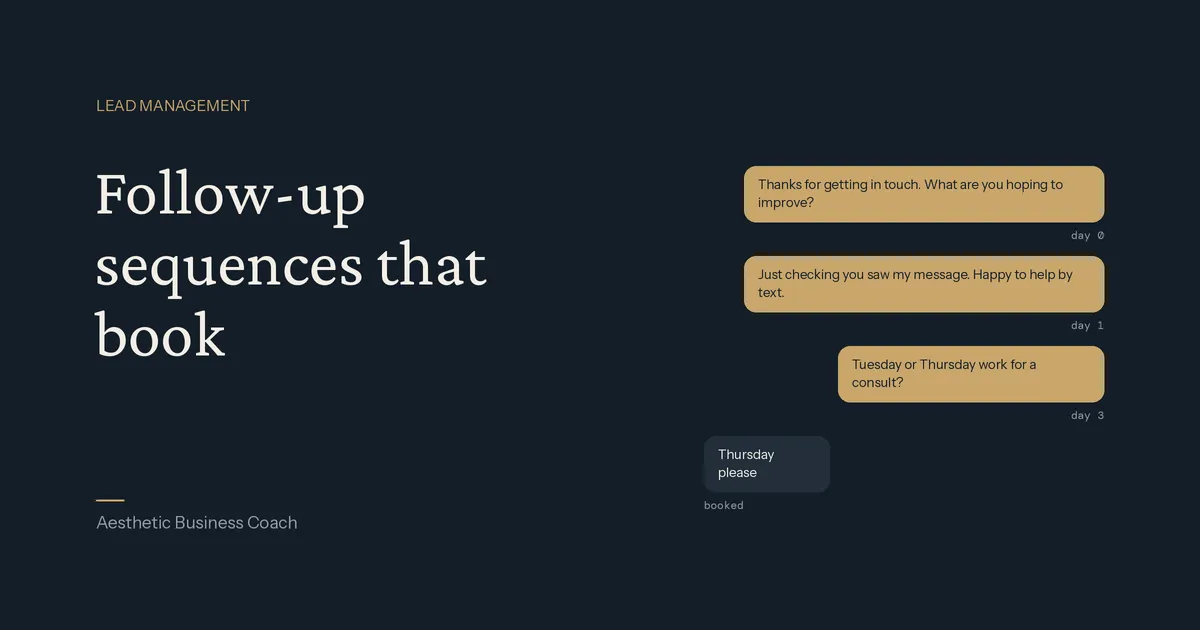
Follow-Up Sequences That Book: When an Enquiry Goes Quiet
A patient follow up sequence is the cheapest revenue in a clinic and the one most owners don’t have, because following up feels like pestering and silence feels like a no. Neither is true. I learned that from a reply that arrived after a year of letters that had never been answered. This post is what that reply taught me about silence, the two sequences every clinic needs, what each message should say, and how to make it run without anyone remembering.
Why does silence not mean no?
Because the people who need something most are often the least able to say so. Saying so means admitting it, and admitting it is the hardest part. They read. They recognise. They’re not ready. Then one day they are. Most owners read silence as a no and stop, and most of the time it’s a not yet.
A story about a reply, details changed. An owner had been receiving my fortnightly letters for a long time without ever answering one. Not a word. I had no idea whether she read them or whether they went to a folder she never opened. After a while I stopped expecting anything, the way you stop expecting a reply from a patient who’s drifted.
Then one Friday, a few minutes after a letter went out, a reply arrived. She said she’d read every single one. She’d never replied because replying would have meant admitting things weren’t fine, and she hadn’t been ready to admit that to anyone, least of all in writing. Then she said she thought she was ready now, and asked whether the calendar link at the bottom still worked.
It did. It always does.
That reply corrected something I’d believed about silence. The enquiry that never answered the follow up. The patient who drifted and ignored every message. The maybe from the consult who went quiet. Most of them aren’t a no. They’re waiting for the moment they’re ready, and the clinic still sending a kind message when that moment arrives is the one they book with.
What is a patient follow up sequence?
A short series of messages, sent automatically after a trigger, that keeps a conversation open without pressure. The trigger is an enquiry that didn’t book, or a consultation that ended without a plan. Each message is brief, in the practitioner’s voice, asks a question or offers an easy next step, and the sequence stops the moment the person replies.
Three things make it work. Timing: the messages arrive at intervals that feel natural, closer together at first and spacing out. Tone: written the way the practitioner would text a patient, warm and specific, never salesy. Stopping: a human reply ends the automation immediately and a person takes over. A sequence that keeps sending after someone’s answered is worse than no sequence.
The sequence is the middle part of the whole speed to lead system: instant first reply, then follow up for the ones who go quiet, then a human finishing the conversation.
What should the enquiry follow up sequence say?
Five messages over ten days. An instant reply that asks a question. A day one check in. A day three offer of specific times. A day seven note that’s useful rather than salesy. A day ten message that leaves the door open and stops. Each one short enough to read on a lock screen.
Here’s the shape, for someone who enquired about a device treatment through a web form and didn’t reply to the first message. Adapt the words, keep the structure.
Instant (minutes): “Hi Emma, thanks for getting in touch. Happy to help. Can I ask what you’re hoping to improve? Then I can let you know what a consultation covers and find a time. Jess”
Day one: “Hi Emma, Jess again from the clinic. Just checking you saw my message yesterday. No rush at all, happy to answer anything by text if that’s easier.”
Day three: “Hi Emma, I’ve got a couple of consultation times this week if it helps to have something to aim for: Tuesday 2pm or Thursday 10am. Either any good?”
Day seven: “Hi Emma, one thing people often ask before their first visit is what a consultation actually involves, so here’s a quick rundown: [link to the consultation page]. Any questions, I’m here.”
Day ten: “Hi Emma, I’ll leave you to it for now. If the timing’s better later in the year, just reply to this and we’ll pick it up. Take care, Jess.”
Notice what none of them do. None of them push. None of them mention a discount. None of them make a claim about results. The tone is a person leaving a door open, and the last message says so explicitly.
What should the consultation follow up sequence say?
Three messages over five days, starting the evening of the consultation. The plan in writing that night. A check in the next morning asking whether anything was unclear. Specific dates on day three. This sequence converts more than any other in the clinic, because the person has already met you and the only thing missing is a decision.
Evening of the consult: “Hi Emma, lovely to meet you today. As promised, here’s the plan we talked through, with the total cost and what each stage involves: [link or summary]. Have a look, and let me know if anything’s unclear. Jess”
Next morning: “Hi Emma, hope you slept on it well. Was there anything in the plan you wanted me to explain further? Happy to go through it by text or a quick call.”
Day three: “Hi Emma, if you’re ready to get started, I’ve got [date] or [date] for the first session. If you’d rather wait a bit, that’s completely fine, just let me know and I’ll check in nearer the time.”
The consultation conversion post covers how to end the consult so this sequence has something to follow. A consult that ended with a recommendation, a price and a date converts on message one. A consult that ended with “have a think” needs all three.
How do you write follow up messages that don’t sound automated?
Write them as the practitioner would text a patient, one at a time, before loading them. Use the patient’s name and the practitioner’s. Ask one question per message. Keep each under three lines. Never mention a discount, a deadline or a result. Read each one aloud and ask whether you’d be happy to receive it.
The messages fail when they sound like marketing. “Don’t miss out!” “Limited availability!” “Transform your skin today!” Those get ignored, and for a clinic they’re also compliance problems. The messages work when they sound like a person who’d genuinely like to help and isn’t bothered if the answer is not yet.
Two practical rules. Write to one person, not to a list. Make leaving easy: every message should be answerable with “not now” without awkwardness, and a “not now” should stop the sequence and set a reminder to check in months later, gently.
How do you set the sequence up so it runs itself?
A trigger for each situation, the messages loaded in order with the delays set, a rule that any reply stops the sequence and alerts a person, and a daily list of replies for the front desk to finish. Then a monthly look at which message produced the most replies, and a tweak.
The two triggers: an enquiry with no booking after the instant reply, and a consultation marked as attended with no treatment booked. Both are standard in ClinicOS and buildable in any CRM that does the seven things in the CRM post. The “Follow Up Sequences That Book” template in the Learning Academy has the full message set, and loading it in your voice is part of the implementation in every plan. What’s included is on the pricing page.
The part that isn’t software is the daily list. Every reply the sequence generates needs a human to finish the conversation the same day, ideally in a protected window when the desk isn’t juggling a patient in front of them. The sequence opens the door. A person walks through it.
Measure two things monthly. The share of quiet enquiries that replied to something in the sequence, and the share of unbooked consultations that booked within two weeks. In every clinic I’ve set this up in, both were higher than the owner expected and the day three message did most of the work.
Frequently asked questions
How many times should a clinic follow up an enquiry?
Five messages over ten days for an enquiry that went quiet, then stop and leave the door open. Three messages over five days after a consultation that didn’t book. Closer together at first, spacing out, each one short and asking a question. Any reply stops the sequence and a person takes over.
Is following up patients annoying?
Not when the messages sound like a person leaving a door open rather than a salesperson chasing. Short, warm, specific, no discounts, no deadlines, no claims, and easy to answer with “not now”. Most patients who go quiet were waiting for the right moment, and a kind message when it arrives is welcome rather than annoying.
What should I send after a consultation that didn’t book?
The plan in writing that evening, with the total cost. A check in the next morning asking whether anything was unclear. Specific dates on day three, with an easy way to say “not yet”. This sequence converts better than any other in the clinic because the patient has already met you.
Should follow up be by SMS or email?
SMS for the short sequence messages, because they’re read within minutes and answered from the couch. Email for the written plan after a consultation and for anything with links or detail. Both from the practitioner, both in their voice, both stopping the moment the patient replies.
Can follow up messages mention treatments?
Device treatments and consultations, yes, without claims about results. Prescription-only treatments should be steered to the consultation without naming brands or specifics, because a templated message sent to many people can count as advertising under the TGA Advertising Code. Keep the sequence about the conversation, not the product.
What do I do with someone who says “not now”?
Thank them, stop the sequence, and set a gentle check in for a few months later. “Not now” is the most honest reply you’ll get and the easiest to respect. The patient who said it in March and gets a kind message in August, with no pressure, is the one who books in September.
Book a free 45 minute discovery call
Bring a count of last month’s enquiries that never booked and consultations that ended without a plan. We’ll work out what a follow up sequence would have recovered, and draft the day one and day three messages in your voice on the call. Book your discovery call here.