
How to Increase Consultation Conversion in Aesthetic Clinics
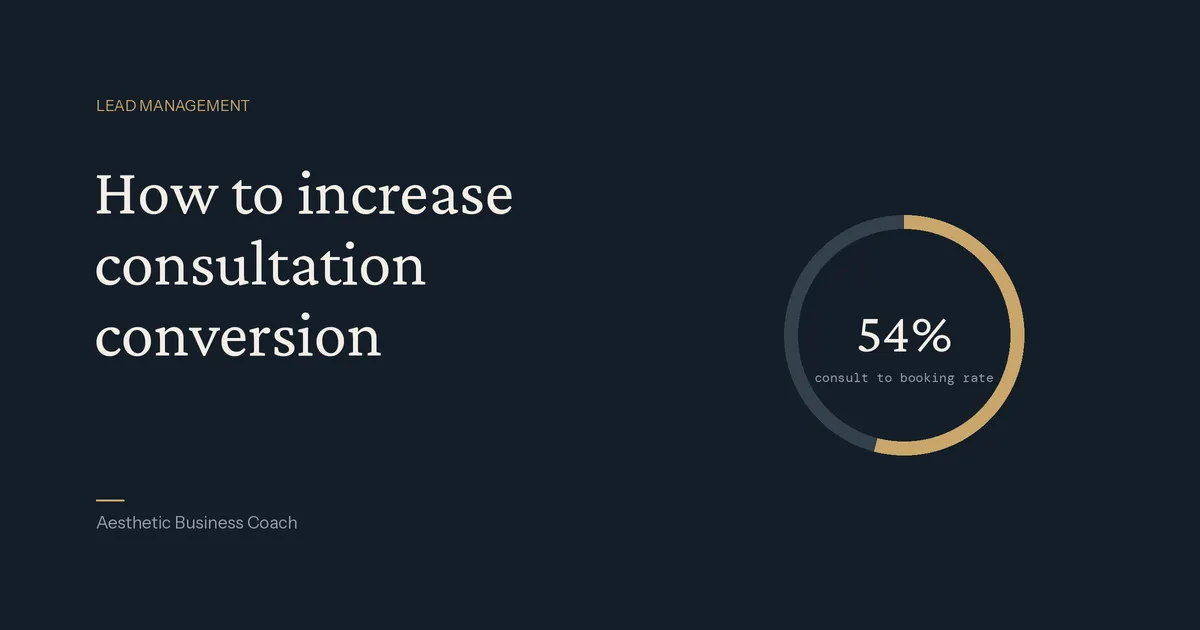
Consultation conversion rate is the number owners are least willing to look at, and the one that changes the business fastest once they do. It’s the share of consultations that end with a booked treatment plan. If it’s low, every dollar spent getting people into the room is wasted at the last step. I’ve sat in hundreds of consultations as a clinic owner and reviewed hundreds more with clients, and the ones that convert have a shape. This post is that shape: the question to ask first, how to end, and why honesty books more.
What is a good consultation conversion rate for an aesthetic clinic?
Measure yours before worrying about anyone else’s. In my experience, clinics that have never used a consultation structure convert well under half their consults into booked plans, and clinics with a structure move that number materially within weeks. The trend against your own baseline matters more than a benchmark.
The formula is simple. Consultations held this month, divided into treatment plans booked from them. Track it weekly, by practitioner, and put it on the same page as your other numbers. The growth guide lists the six numbers that belong together.
Two things usually surprise owners the first time they see it. The first is how low it is, because a consult that ends warmly with “let us know” feels like it went well, and the diary says otherwise. The second is the gap between practitioners in the same clinic, doing the same treatments, at the same prices. That gap is never about clinical skill. It’s about what happens in the last five minutes.
Why does asking “why now?” change everything?
Because patients arrive with a solution, not a problem. They’ve researched, looked at pictures, and decided on a treatment name. If you engage only with the solution they bring, you often treat the wrong thing well, you compete on price, and you miss the event or fear driving the decision, which is the thing that actually converts.
She came in asking about her jawline. Specific, researched, clear about what she wanted done. Early in my career I’d have discussed exactly that, quoted for exactly that, and probably treated exactly that.
By then I’d learned to ask one more question before discussing anything: what made you decide to come in now?
There was a pause, and then a completely different conversation. Her daughter’s wedding was some months away. She’d seen a photograph of herself at a family thing and hadn’t recognised the tired person looking back. She wasn’t there about her jawline. She was there because she wanted to look like herself in photographs her family would keep for fifty years.
Everything about the right recommendation changed. The jawline was part of it, but the timeline mattered enormously, because some things need planning well ahead of a date that can’t move. We built a plan around the actual goal, staged properly, with the important work early enough to settle. She got what she wanted, which wasn’t what she’d asked for when she walked in.
Ask why now. Then be quiet long enough to hear the answer. Patients can feel within two minutes whether they’re in a transaction or a relationship, and only one of those books a plan.
How should a consultation be structured?
Five parts, in order, on one page the practitioner knows by heart. Why now. What they’ve tried and what worries them. Assessment. A recommended plan with options, staged against their timeline. An ending that includes a price, a date and a next step. Most consults skip the first part and the last, and those are the two that convert.
Here’s the shape we use with clients.
Why now. The one question, then silence. Write down the real reason in their words.
History and worries. What they’ve had done before, what they’re nervous about, what they’ve read. The nervousness is important: unaddressed, it’s the reason they “have a think”.
Assessment. The clinical part, which practitioners already do well. Say what you’re seeing in plain language as you go.
The recommendation. One plan, staged, that addresses the real reason. Offer a second option if it’s genuinely right, but lead with your recommendation. Patients came to an expert to be told, kindly, what to do.
The ending. Price for the plan, total including GST. The first appointment date. What happens next, including the message they’ll get tonight.
The structure doesn’t make the consult longer. It makes it end.
Why should you recommend the smaller treatment when it’s the right one?
Because the commercial logic is on the side of the honest answer, even when it costs you today’s sale. A patient talked into the wrong treatment gets a disappointing result, and disappointing results come back as refund requests, quiet departures and reviews. A patient told the truth comes back for years and sends people.
She came in certain about what she wanted. She’d researched it, seen it on someone she admired, and arrived with the treatment chosen and the money ready. Commercially, all I had to do was agree.
It wasn’t right for her. Not dangerous, not unreasonable, just not the thing that would give her the outcome she described when I asked what she was hoping for, which was to look less tired. What she’d asked for would have changed something she’d barely mentioned. So I told her, and explained what I thought would work, which was a smaller, cheaper piece of work.
She was annoyed. She’d spent weeks deciding and here was someone telling her she’d decided wrong. She left without booking, and I stood in the room afterwards feeling like an idiot for talking a paying patient out of a treatment she’d actively wanted.
She came back three weeks later and booked what I’d suggested. She’s never been treated anywhere else since. Over the following years she sent her sister, two colleagues and a friend, and each of those sent others. The consultation I lost became one of the most valuable relationships the clinic ever had.
The cost of honesty is immediate and visible. The benefit is delayed and invisible. You feel the empty slot today and you never quite see the four patients who arrived because of it. Owners under pressure forget that maths. Don’t.
How should a consultation end?
With a recommendation, a price for the plan, a date, and a next step, before the patient stands up. If they want to think, agree when you’ll speak and put it in the diary. The worst ending in the industry is “have a think and let us know”, because it hands the decision to the nervous person.
The ending is where most conversion is lost, and it’s lost out of politeness. The practitioner doesn’t want to seem pushy, so they leave the decision open. The patient, who came in wanting to be told what to do, leaves without being told, and the nervousness they mentioned in part two takes over on the drive home.
An ending that converts sounds like this: “Based on what you’ve told me about the wedding, here’s what I’d recommend, in this order, and here’s what it costs in total. I’d want to start by early next month to give the first stage time to settle. I’ve got a Tuesday or a Thursday. Which suits?”
If they’re not ready: “That’s completely fine. Can I send you the plan in writing tonight, and shall we speak on Friday once you’ve had a look?” Then the plan goes out, the Friday call is in the diary, and a message lands the next morning.
Deposits belong here too. A modest deposit at booking, credited against treatment, turns an intention into a commitment. That’s the subject of the no-shows post, publishing this week.
What happens in the three days after the consultation?
A written plan the same evening, a check in the next morning, and a follow up on day three if nothing’s booked. This is the stretch where a warm consultation cools into a lost one, and it’s the part that can run automatically. The consult opens the relationship. The three days decide whether it continues.
Most clinics do nothing here. The patient leaves, the notes get written, and if they don’t ring back, the file closes. Three short touches change that. The plan in writing, so they can show a partner. A message the next day asking whether anything was unclear. A message on day three offering the dates again. None of it is pushy if the consult was good, because they asked for help and this is help.
This is the “Consultation Framework” playbook in the Learning Academy and the follow up automations that ClinicOS runs after every consult. Building it for your clinic is part of the implementation in every plan; what’s included is on the pricing page.
How do you train the team on it?
Write the five parts on one page, role play the ending until it’s comfortable, then listen to real consultations for a month. The ending is the part practitioners find hardest, because it feels like selling. Reframe it: the patient came to be told what to do, and leaving them undecided is the unkind option.
Record your own consultations for a fortnight, with consent, and listen to the last five minutes of each. You’ll hear the moment the conversation goes soft. Then practise the ending script with each practitioner, twice, out loud. It’s awkward once and natural after that.
Measure by practitioner. The gap between your best converter and the rest is the training plan, and the best converter is usually the one who asks why now and ends with a date.
Frequently asked questions
What is consultation conversion rate?
The percentage of consultations that end in a booked treatment plan. Consultations held divided into plans booked, measured weekly and by practitioner. It’s the last step in the patient journey before revenue and usually the biggest leak in the clinic, because a consult that ends without a plan feels fine and costs a fortune.
What should I ask at the start of an aesthetic consultation?
“What made you decide to come in now?” Then wait. Patients arrive with a treatment name, and the answer to that question reveals the real reason: an event, a photograph, a change they’ve noticed. The recommendation, the timeline and the conversion all depend on it. It’s the one consultation technique I’d insist on.
How should an aesthetic consultation end?
With a recommended plan, the total price including GST, a first appointment date and an agreed next step. If the patient wants to think, agree a time to speak and send the plan in writing that evening. Never end with “have a think and let us know”. That ending hands the decision to the nervous person and gives them no reason to return.
Should I recommend cheaper treatments if they’re the right ones?
Yes, every time. The patient talked into the wrong treatment gets a disappointing result that costs you refunds, reviews and referrals. The patient told the truth comes back for years and sends people. The cost of honesty is visible today; the benefit arrives over years. The commercial logic favours the honest answer.
How long should a consultation take?
Long enough to ask why now, assess properly, and end with a plan and a date. Thirty to forty five minutes is typical for a first consultation. Shorter consults skip the beginning or the end, and those are the two parts that convert. A structured consult isn’t longer than an unstructured one. It just finishes.
Why do patients say they’ll think about it and never come back?
Usually because the consultation ended without a recommendation, a price and a date, so the nervousness they mentioned took over on the drive home. Sometimes because nobody followed up. Send the plan in writing the same evening, check in the next day, and offer dates again on day three. Most of the “thinkers” were waiting to be helped.
Book a free 45 minute discovery call
Bring last month’s consultation count and how many became booked plans. We’ll work out your conversion rate by practitioner, walk through the five part structure, and write your ending script on the call. Book your discovery call here.