The Device in the Corner: Making an Aesthetic Device Pay
Aesthetic device ROI is the conversation nobody has at the demonstration. The rep shows you what the machine does, you’re genuinely impressed, the finance is arranged, and a year later it’s being used twice a week in a clinic that could run it most days. I’ve watched it happen to careful, intelligent owners, and I’ve done it myself. The device is rarely the problem. This post is the five small failures that keep a good device idle, the order to fix them, and the hour of database tidying that filled one clinic’s diary before a dollar went on ads.
Why do good devices sit unused?
Because owners buy capability and assume demand will follow, and demand almost never follows on its own. A device, a new practitioner, a second room, a new treatment: each one is capacity, and capacity without a plan to fill it is just a payment. The device works. Nobody built the road to it.
A story about a machine, details changed. She’d bought a device the previous year. Serious money, financed over several years, chosen carefully after a lot of research and a demonstration that had impressed her. It was a good device. That isn’t the story.
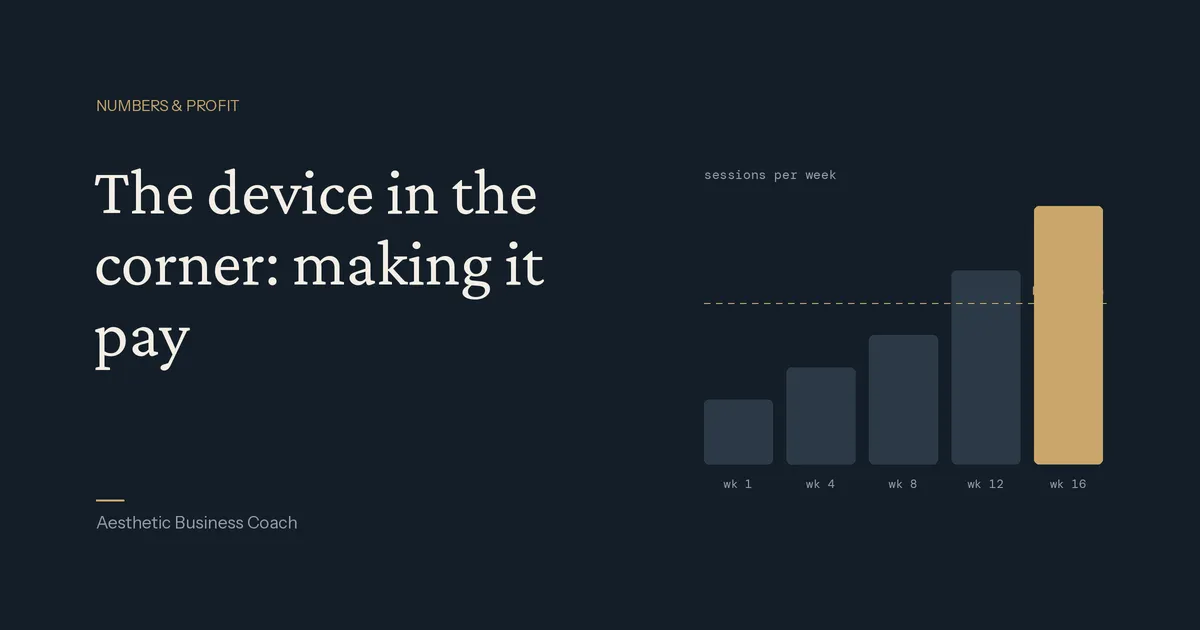
The story is that it was being used about twice a week, in a clinic that could have run it most days, and the payments were going out regardless. When we looked at why, there was no single failure. There were five small ones, and they’re the same five nearly every time.
What are the five failures that keep a device idle?
Nobody in the clinic can say in plain language who the treatment is for. There’s no course attached, so patients drift before results arrive. It was marketed as an announcement, once. The existing patient base was never told properly. Nobody owns the weekly number, so nobody notices it drifting down.
Nobody can say who it’s for
The team knew what the device did technically, because the rep had trained them on that. They couldn’t comfortably tell a patient which problem it solved and who it suited, so they rarely raised it. A device the front desk can’t describe in one sentence is a device that doesn’t get mentioned on the phone.
No course attached
The device worked properly over a course of sessions, and the clinic was selling single appointments. Patients started, drifted away before the results arrived, and then told their friends it hadn’t done much. Selling one session of a course treatment is the fastest way to earn a bad reputation for a good machine.
Marketed as an announcement
There’d been a post when it arrived. “We’re excited to welcome our new device.” It did what announcement posts do, which is nothing. An announcement tells people you bought something. It doesn’t tell them why they’d want it.
Existing patients never told
Hundreds of people already trusted the clinic, many with exactly the concern the device addressed, and they had no idea it was there. The warmest audience in the world for the treatment was sitting in the database, unspoken to, while the owner wondered whether to run ads.
Nobody owns the number
No one in the building was responsible for how many sessions it did in a week, so nobody noticed the answer drifting down. A number without a name against it isn’t a target. It’s a fact you find out about later.
How do you fix an underused device, in order?
One clear sentence about who it’s for. The course as the product, mapped and booked from the first consultation. A campaign to your own database before anything else. Then paid traffic, once the internal work is converting. A weekly number on the scorecard with a name against it. None of it is clever. All of it works.
We fixed those five in order.
One sentence. “This is for people who have [concern] and want [outcome type] without [downside].” Every person in the clinic could say it without notes.
The course as the product. Mapped at the first consultation, priced as a course, booked as a course. Single sessions available but not the default. This is where the consultation structure does its work.
A proper campaign to her own database first. Email and SMS to everyone with the relevant concern in their notes, in her voice, explaining who it’s for and offering a consultation.
Paid traffic, once the internal work was converting. Device treatments can be named and priced publicly, so they carry direct response ads well. The Google Ads guide covers the build.
A weekly number with a name. Sessions this week, on the scorecard, owned by one person.
The device is busy now. Nothing about the machine changed.
Why should your own database come before ads?
Because it’s the warmest audience you’ll ever have for a new treatment, and speaking to it costs almost nothing. Most owners think of their contact list the way they think of the garage: full of things they meant to sort one day, too big to face, so they shut the door and buy new enquiries instead.
A story about tidying up, details changed. She had thousands of names accumulated over years. Patients who came monthly and patients who came once. Enquiries that never booked. Voucher buyers. A supplier who’d somehow ended up on the list. No idea who was active and who’d drifted.
The hour we spent on it was almost comically simple. We exported the list and sorted it into four piles: active patients on their treatment rhythm, lapsed patients six months or more since their last visit, enquiries that never booked, and voucher holders who hadn’t redeemed. She said halfway through that she felt slightly silly for having avoided it for three years.
Then each pile got its own message, because they need completely different ones and the reason mass emails fail is that they talk to all four at once. Actives got recall reminders timed to their treatment windows. Lapsed got a warm “we’d love to see you again” with an easy way back. Never booked got helpful, unhurried nurture. Voucher holders got a friendly nudge and a booking link. All automated, all in her voice.
The lapsed pile alone produced more bookings in its first month than the new enquiries she’d been buying. She rang me to say so and sounded slightly indignant, as if the money had been hiding from her on purpose.
For a device, the database is the first campaign every time. The people in there already trusted you once. They’re waiting to be spoken to in the right way, by name, with the right message. The patient lifetime value post explains why they’re worth so much more than a stranger.
How do you work out whether a device is paying for itself?
Sessions per week, multiplied by revenue per session, against the monthly payment plus consumables plus the practitioner time. Find the break even number of sessions and put it on the wall. Then track sessions weekly, with a name against the number. If you’re below break even, the fix is one of the five above, not a new device.
The sum is simple and most owners have never done it. Monthly device payment, plus consumables per session times sessions, plus the share of practitioner wages for the time it takes, divided by revenue per session, gives you the sessions per month the device needs to cover itself. Divide by four and that’s the weekly number. Everything above it is profit on capacity you’ve already paid for.
Two cautions. Use the course price per session, not a one off session price, because the course is what you’re selling. Include the consultation time that converts people onto the device, because a device that needs a forty minute consult to sell has a cost the demonstration didn’t mention.
The “Device Return Planner” in the Learning Academy is this sum on one page, and working it through for every device in the clinic is part of the numbers session in coaching. What’s included in each plan is on the pricing page.
What should you do before buying the next device?
Write the plan before the demonstration. Who it’s for, in one sentence. The course you’d sell and its price. The campaign to your database on launch week. The weekly session target and who owns it. If you can’t write those four things before you sign, the payment will arrive before the demand does.
The lesson generalises beyond equipment. A new practitioner is capacity. A second room is capacity. A new treatment is capacity. Each one arrives with a cost on day one and no revenue until someone builds the road to it. The owners who grow treat every purchase of capacity as a marketing project with a launch date, not an announcement.
If you’ve got a device in the corner right now, start with the five failures. Most clinics have three of them. Fix the sentence, attach the course, message your database, and put a number on the wall. The machine was never the problem.
Frequently asked questions
How do I calculate ROI on an aesthetic device?
Work out the sessions per month needed to cover the device payment, consumables and practitioner time at the course price per session. That’s your break even. Track actual sessions weekly against it. Everything above break even is profit on capacity already paid for. If you’re below it, the cause is almost always demand, not the device.
Why is my new device not booking?
Usually one of five things. Nobody in the clinic can say in one sentence who it’s for. It’s sold as single sessions rather than a course. It was announced once and never marketed. Your existing patients were never told properly. Nobody owns the weekly number. Fix them in that order, starting with your own database.
Should I sell device treatments as single sessions or courses?
As a course, mapped and booked at the first consultation, with single sessions available but not the default. Most device treatments work over a series, and patients who buy one session drift before results arrive and then tell friends it didn’t work. The course is the product. Price it and book it that way.
How should I launch a new treatment to existing patients?
Sort your database into active, lapsed, never booked and voucher holders, then message each group differently. For the launch, write to everyone whose notes mention the relevant concern, in the practitioner’s voice, explaining who the treatment is for and offering a consultation. Do this before spending on ads. It’s the warmest audience you’ll ever have.
Do I need ads to fill a device?
Not first. Your database, a clear one sentence description and the course as the product usually fill a large part of the diary. Add paid traffic once the internal work is converting, because device treatments can be named and priced publicly and carry direct response ads well. Ads on top of a clinic that can’t describe the treatment waste money.
What should I check before buying a new aesthetic device?
Whether you can write the plan before the demonstration: who it’s for in one sentence, the course you’d sell, the database campaign for launch week, and the weekly session target with an owner. If you can’t write those four things, the payment will arrive before the demand. Capacity without a plan to fill it is a cost.
Book a free 45 minute discovery call
Bring the device that’s underused and a rough idea of its monthly payment. We’ll find the break even number on the call, work out which of the five failures apply, and draft the first message to your database. Book your discovery call here.