

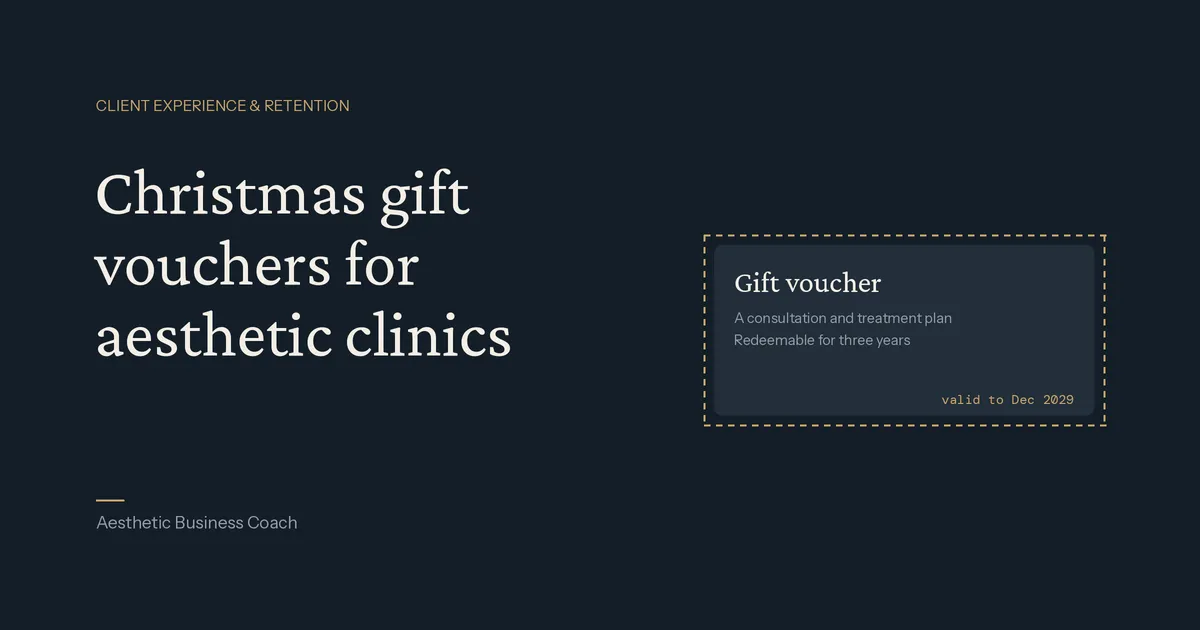
Christmas Gift Vouchers for Aesthetic Clinics That Pay Off
Gift vouchers for aesthetic clinics do one thing better than any other marketing: they bring in a new patient who’s been personally recommended by someone who loves you, at no acquisition cost. Christmas is when most get sold, and most clinics treat them as a December cash bump and then forget the person holding one. This post is the rules you have to get right, what a voucher should and shouldn’t be for in a regulated clinic, how to price and sell them, and the part that actually pays: what happens after the voucher is redeemed.
What are the rules for gift vouchers in Australia?
Under Australian Consumer Law, a gift card or voucher must be valid for at least three years from the date it’s sold, the expiry date must be shown clearly on the voucher, and most fees charged after purchase are banned. The rules have applied nationally since November 2019 and they cover clinic vouchers like any other.
What that means in practice:
A voucher sold on 15 December 2026 can’t expire before 15 December 2029. Print the date.
No activation fees, balance enquiry fees or “administration” charges after the sale.
If the voucher is for a dollar value, the recipient can put it toward anything you offer, and any unused balance stays valid until expiry.
Your terms need to be clear at the point of sale and on the voucher itself. Refund policy, whether it can be used with other offers, and whether it’s transferable.
The three year rule surprises clinics that used to print “valid for 12 months”. Those terms are void and the ACCC has been active on this. Fix the template before December. The longer validity is also good for you: a voucher that sits in a drawer for eighteen months and then gets redeemed is still a new patient.
What can a clinic voucher be for under AHPRA rules?
A dollar value or a consultation. Not a specific higher risk treatment. A voucher for “one anti-wrinkle treatment” is a prescription medicine advertised and sold to someone who hasn’t been assessed, a problem under both the TGA rules and AHPRA’s ban on encouraging unnecessary use. A consultation voucher, or a credit toward a recommended plan, sidesteps that.
The principle: the person buying the voucher isn’t the patient, and they can’t decide what treatment someone else needs. The practitioner decides that, in a consultation, after assessment. So the voucher should get the recipient into the room, and the room decides the rest.
Good voucher formats:
A dollar value, redeemable against any treatment or product after consultation.
A consultation and skin analysis, with a credit toward the recommended plan.
A named device treatment session where assessment happens at the appointment, and only for treatments that don’t need a separate consultation first.
Avoid: vouchers naming injectable brands, vouchers for “a treatment of your choice” that list prescription procedures, and any voucher marketing that uses “treat yourself” language for higher risk procedures. The 2025 AHPRA guidelines specifically name trivialising framing. The AHPRA guidelines post has the full list.
How should you price and present vouchers?
At face value, beautifully presented, with the terms and expiry printed, and with an option that includes a consultation. Don’t discount vouchers. A voucher sold below face value is a discount on treatment by another route, and it teaches the same lesson. Add value instead: the consultation and analysis included with any voucher over a set amount.
Presentation matters more for vouchers than for anything else you sell, because the buyer is giving it to someone. A card in an envelope with the clinic’s name, the practitioner’s name and a short note about what to expect at a first visit. Physical vouchers sell better than digital ones at Christmas, and a digital option for last minute buyers on 24 December catches the rest.
Three price points work: a consultation only, a mid value credit, and a higher value credit that includes the consultation and analysis. Let the buyer choose. Round numbers. Total price including GST, obviously, and no “bonus value” gimmicks where a voucher is worth more than it cost, which is another discount in disguise.
How do you sell vouchers in December?
To your own patients first, from mid November, by email and SMS in the practitioner’s voice. Then at reception, with a display and a mention at checkout. Then a small paid campaign in the final fortnight for last minute buyers. Your existing patients are the buyers; the recipients are their friends and family, who arrive as new patients.
The sequence:
Mid November: email and SMS to all active patients. “If you’re stuck for a gift this year, a voucher for a consultation and skin analysis is the one thing people don’t buy for themselves.” Link to buy online.
Reception: a small display, a line in the checkout script (“we’ve got Christmas vouchers if that helps with anyone on your list”), and a physical card that looks worth giving.
Second week of December: a reminder to the list, with the digital option for anyone who’s left it late.
Final fortnight: a short Meta campaign to your site visitors and a search campaign on “gift voucher” plus your suburb and treatment. Device treatments and consultations only in the ad, terms stated.
20 to 24 December: digital vouchers, delivered by email in minutes, for the people who always leave it late.
The Black Friday post covers why the loyalty first order matters. Your patients buying vouchers for their friends is the warmest referral channel you’ll ever have.
What happens after the voucher is redeemed?
That’s where the money is. A voucher recipient is a new patient recommended by someone they trust. Treat the first visit as the start of a relationship: a proper consultation, a plan, aftercare, follow up, a place in the recall system. Most clinics redeem, treat, and never see the person again.
The numbers make the point. A voucher redeemed for a single session and forgotten is worth the face value. The same person, converted into a patient on a plan, is worth what the lifetime value post works out, which is many times more. The voucher paid for the introduction. The clinic decides whether it becomes a relationship.
Two things to build before December. A tag in your CRM for voucher recipients, so they get a first visit sequence rather than being treated as walk ins. A reminder sequence for unredeemed vouchers: three months after purchase, then six, then well before expiry, warm and helpful, because a voucher in a drawer is a patient you haven’t met yet.
How do you track whether vouchers are worth it?
Vouchers sold, vouchers redeemed, redeemed recipients who booked a second visit, and their revenue over twelve months. Compared against what you spent promoting them. Sold minus redeemed tells you whether the reminders are working. Second visits tell you whether the first visit was run properly. Twelve month revenue tells you what the channel is actually worth.
Most clinics only track the first number, which makes vouchers look like a December cash bump. Track the fourth and they look like the cheapest patient acquisition in the clinic. That’s the reporting ClinicOS does by tagging the source on every patient, and building the voucher sequences is part of the retention work in coaching. What’s included in each plan is on the pricing page.
Get the template fixed for the three year rule this week, decide what the voucher is for, and write the mid November email. The rest is a first visit run well.
Frequently asked questions
How long must a gift voucher be valid in Australia?
At least three years from the date of sale, under Australian Consumer Law, with the expiry date shown clearly on the voucher. Post-purchase fees such as activation or balance enquiry fees are banned. Vouchers printed with shorter validity are void on that term. Check your template before December.
Can an aesthetic clinic sell vouchers for injectable treatments?
Not as a named prescription treatment. Prescription-only medicines can’t be advertised to the public, and a voucher for a specific higher risk procedure for someone who hasn’t been assessed raises AHPRA concerns about encouraging unnecessary use. Sell a dollar value or a consultation instead, and let the practitioner recommend the plan in the room.
Should clinics discount gift vouchers?
No. A voucher sold below face value, or “worth” more than it cost, is a discount on treatment by another route and teaches the same lesson about price. Sell at face value, present it beautifully, and add value with a consultation and skin analysis included above a set amount.
When should a clinic start selling Christmas vouchers?
Mid November to your existing patients by email and SMS, with reception mentions and a display from then on. A reminder in the second week of December, and digital vouchers for last minute buyers in the final week. Your patients are the buyers; their friends and family are the new patients who arrive in January.
What should happen when someone redeems a voucher?
Treat them as a new patient starting a relationship, not a transaction to close. A proper consultation, a recommended plan, aftercare that evening, follow up in three days, and a place in your recall system. Tag them in your CRM so they get a first visit sequence. Most clinics redeem and forget, which wastes the introduction.
How do I remind people to use unredeemed vouchers?
An automated sequence: a warm message three months after purchase, another at six, and one well before expiry, each with an easy booking link and no pressure. A voucher in a drawer is a patient you haven’t met yet. The reminders are a service to the recipient, not a sales tactic.
Book a free 45 minute discovery call
Bring your current voucher template and last year’s voucher numbers, sold and redeemed. We’ll check the terms against the three year rule, decide what the voucher should be for, and draft the mid November email. Book your discovery call here.