

TGA Advertising Rules for Cosmetic Injectables, Explained
The TGA doesn’t allow prescription only medicines to be advertised to the public, and most cosmetic injectables are prescription only. Since 2024 that has covered the generic terms clinics used for years, not only the brand names. This post covers what the rule says, what changed and when, which words are out, what to write instead, where the rule applies, and how to audit your own marketing in an afternoon. I’m a clinic owner and a coach, not a lawyer, so treat this as a working guide and run anything public past your own advisor.
What do the TGA rules say?
One rule does most of the work. Prescription only medicines can’t be advertised to the public, directly or indirectly. Most cosmetic injectables contain prescription only substances, so they’re caught by it. The TGA sets this out plainly in the notes to its April 2024 webinar for the industry.
The word to notice is indirectly. You don’t have to name a product to advertise it. If your wording leads a reader to think of a prescription product, that’s enough.
The rule applies to whoever does the advertising. That’s the clinic, the practitioners, the staff member who runs the Instagram, and the agency you pay. Handing your marketing to someone else doesn’t hand over the responsibility.
What changed, and when?
The law didn’t change. The TGA’s position on generic terms did. For years it accepted general, non product wording when a clinic was promoting its service. That allowance has gone.
- Before December 2023. Brand names were already out. General terms were tolerated when they described a service.
- 18 December 2023. The TGA removed the earlier guidance that listed general terms it had considered acceptable. Industry bodies such as the Australasian Society of Aesthetic Plastic Surgeons told their members in the weeks that followed.
- March 2024. Updated guidance on advertising health services was published.
- April and May 2024. The TGA ran a webinar for the industry and published a set of questions and answers on cosmetic injections.
The TGA’s own questions and answers say the legislation is unchanged. What changed is that the rule is now applied to cosmetic clinics the way it’s applied to everyone else.
More than two years on, I still see clinic websites every week that read as if none of this happened.
Which words are out?
Anything that draws the reader’s mind to a prescription only product. That’s a wider net than most owners expect.
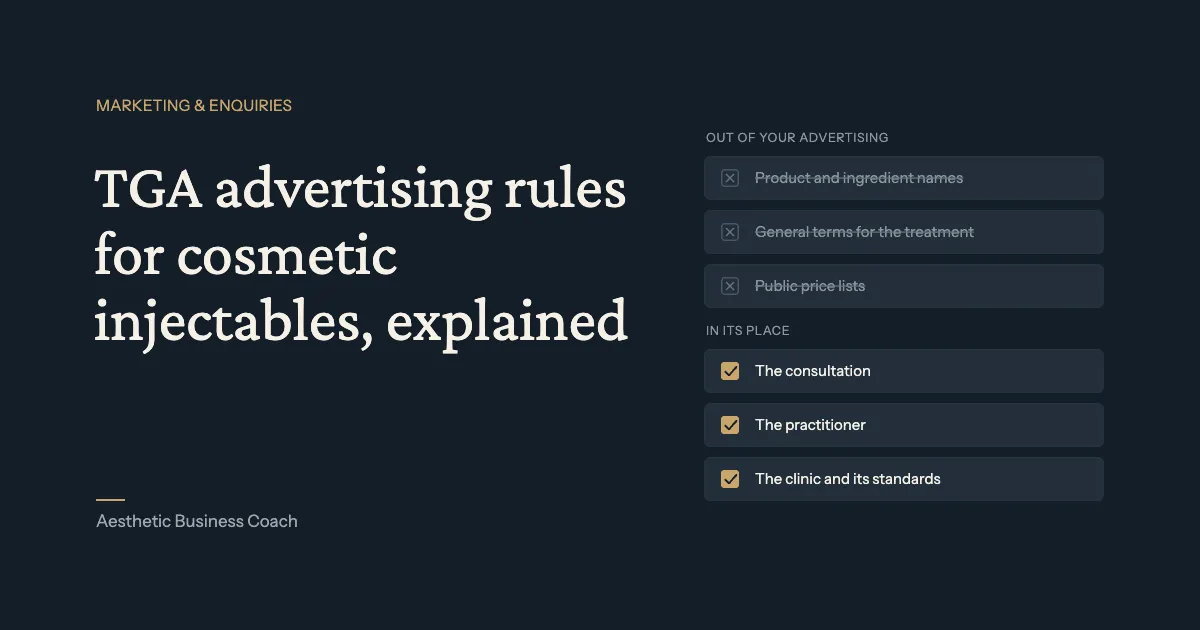
- Brand names and ingredient names. These were never allowed.
- The general terms. Anti wrinkle injections, wrinkle reducing injections and dermal fillers are the ones named in the coverage of the change.
- Stand ins. Acronyms, nicknames, abbreviations and hashtags that everyone understands to mean the product carry the same risk.
- Pictures. A photo of a branded vial or box says the name without typing it.
- Public price lists for those treatments.
The guidance reaches business names too. Whether a name with the word injectables in it is a problem depends on the context, so it’s worth looking at what’s over your own door. The same thinking applies to any prescription treatment a clinic offers, not only the cosmetic ones.
What can you say instead?
The consultation. The TGA’s advice is to advertise the type of consultation you offer and leave the goods out of it. Its own example is “our clinic can provide consultations about reducing wrinkles”. It won’t go further than that. Its questions and answers say it can’t provide a list of acceptable substitute terms.
That leaves a great deal you can talk about, inside AHPRA’s rules on claims.
- The concern. Fine lines, skin texture, the changes that come with age.
- The consultation. Who it’s with, how long it takes, what happens in it, and that there’s no obligation.
- The practitioner. Registration, training, experience and approach.
- The clinic. The rooms, the team, the standards, what a first visit feels like.
- Device and skin treatments. These aren’t prescription medicines, so they can be named in public. They carry most of the direct response work in compliant clinic marketing.
Here’s what the swap looks like in practice.
- Out: a page headed with a general injectable term and a from price. In: a page about consultations for lines and wrinkles with a registered nurse.
- Out: a monthly special on a prescription treatment. In: an invitation to book a private cosmetic consultation and talk through the options.
- Out: a caption naming the treatment a patient had. In: a caption about what happens in a first consultation.
- Out: hashtags built on product names. In: hashtags about your clinic, your suburb and skin health.
Notice what the replacements have in common. Each one tells the patient what they can book and who they’ll see. None of them tells the patient what they’ll be given, because that’s decided in the room.
Where do the rules apply?
Everywhere the public can see. Owners tend to fix the homepage and forget the rest.
- Your website. Page copy, menus, page titles, image descriptions and downloadable price lists.
- Your online booking menu. Service names in a public booking page are advertising too.
- Your Google Business Profile. The service list is where I find the most problems.
- Social media. Captions, bios, highlights, pinned posts and hashtags, including old posts that are still public.
- Paid ads. The ad copy and the landing page. Google Ads has its own policy restricting prescription drug terms in ad text, landing pages and keywords in Australia, so we don’t bid on them at all.
- Email and SMS campaigns. A message sent to a list is advertising.
- Staff accounts. A practitioner’s personal page promoting the clinic counts.
There’s one place the advertising rules don’t reach, and it matters. The TGA’s questions and answers confirm that information shared between a practitioner and a patient in a private consultation isn’t subject to them. Products, options and prices can all be discussed there. That’s why compliant marketing sells the consultation and nothing else.
How does this sit with AHPRA?
Two regulators, two sets of rules, and both apply at once. The TGA is concerned with the goods. AHPRA is concerned with how a regulated health service and its practitioners are advertised: testimonials, claims about outcomes, inducements, and the specific guidelines for higher risk cosmetic procedures that started on 2 September 2025.
A post can pass one and fail the other. A caption that avoids every product term but quotes a happy patient breaks AHPRA’s rules. I’ve gone through that side in the AHPRA advertising guidelines post.
How do you audit your marketing in an afternoon?
Work through seven places with a list of the terms beside you. Don’t trust your memory of what’s on the site. Look.
- Search your website. Use the site search, or open each page and search it, for brand names, general terms and the word inject.
- Open your online booking page as a patient would and read every service name.
- Read your Google Business Profile service list and description.
- Scroll your social accounts back to the start, including the bio, highlights and pinned posts.
- Open your ad accounts. Read the live ads, the keywords and the pages they land on.
- Check your email templates and any automated messages that go to a list.
- Paste anything you’re unsure of into our free Ad Checker, which flags the common problems against both sets of rules.
Then rewrite. Don’t go quiet. The clinics that come through this best are the ones that rebuild their public content around consultations, practitioners and device treatments, and keep publishing.
Does compliant marketing still work?
Yes, and in my experience it often works better. An ad that sells a product attracts people shopping for a product, and a product can always be found cheaper down the road. Marketing that sells a consultation with a named practitioner attracts people choosing a person.
It also takes the fear out of pressing publish. When the rules are built into the first draft, a change in guidance means adjusting a sentence, not deleting a channel. The wider plan is in aesthetic clinic marketing in Australia.
Frequently asked questions
Can I say anti wrinkle injections on my website?
No. The TGA no longer accepts general terms that point to prescription only products in public advertising, and a website is advertising. Describe the consultation and the concern instead.
Can I use the word injectables?
It’s a risk. The TGA’s questions and answers address the term directly, and say a business name that uses it has to be judged in context. We keep it out of clinic advertising and recommend clinics do the same.
Can I talk about injectable treatments in a consultation?
Yes. The TGA confirms that information shared between a practitioner and a patient in a private consultation isn’t subject to the advertising rules. That’s where products, options and prices belong.
Can I show prices for injectable treatments?
Not in public. A price list for a prescription only treatment on your website, your booking page or your socials is advertising it. Give prices in the consultation.
Do the rules apply to old social media posts?
Yes, for as long as they’re public. A post from three years ago that anyone can still scroll to is still advertising your clinic today. Edit it, archive it or delete it.
What happens if a clinic gets it wrong?
The TGA can require advertising to be taken down, issue infringement notices and take court action over serious or repeated breaches. AHPRA can act separately against registered practitioners. Fixing your marketing before anyone asks is far cheaper than fixing it after.
Book a free 45 minute discovery call
Send us your website and your Instagram before the call. We’ll go through your public content against the current TGA and AHPRA positions, show you what to change first, and map what to say instead. No pitch. Book your discovery call here.